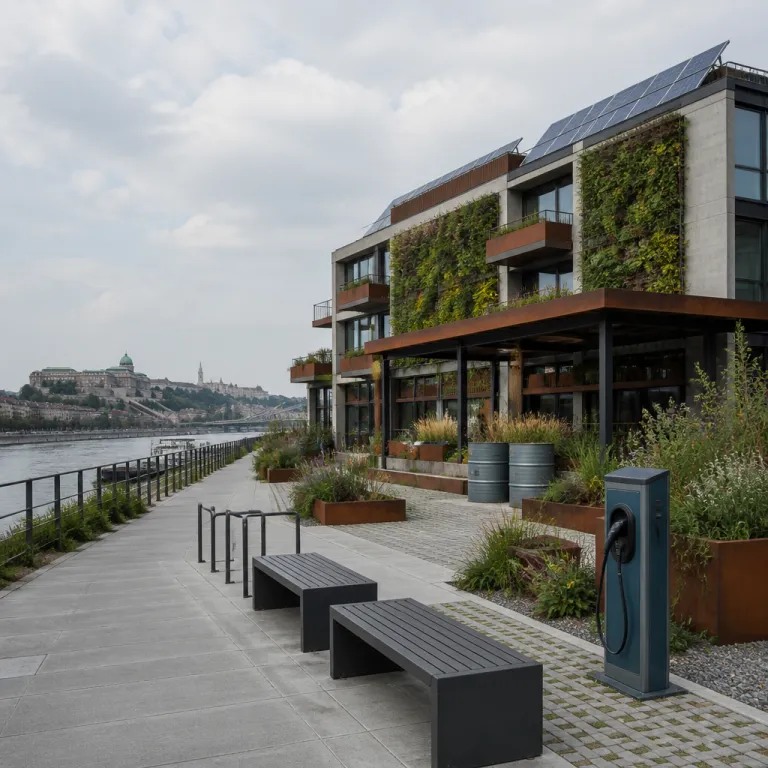
Why sustainable accommodation in Budapest matters for modern luxury travel
Business travelers extending a stay in Budapest increasingly want more than polished service. They expect their chosen hotel in the city to match corporate sustainability policies while still feeling indulgent and quietly luxurious. For many executives, the best accommodation Budapest can offer now means a property that treats energy, water and waste with the same seriousness as concierge response times.
This shift is especially visible in the central districts along the Danube, where historic palace façades hide upgraded systems that cut emissions without dimming the chandeliers. In this context, choosing where to stay Budapest side by side with your meeting schedule now also means reading into certifications, thermal water use and proximity to efficient public transport. The result is a new generation of luxury hotels Budapest wide that can credibly host a board meeting, then send you to a spa that runs on the city’s own geothermal resources.
Corporate travel managers are quietly rewriting their playbooks, and Budapest city hotels are responding with measurable action. Many global companies now require proof that a hotel Budapest partner has a sustainability policy, energy monitoring and waste reduction plans before signing preferred supplier agreements. When you evaluate accommodation Budapest options, you are no longer just choosing a view of Buda Castle or the Chain Bridge ; you are also choosing how your trip’s footprint will be reported in next quarter’s ESG dashboard.
Certified green luxury: BREEAM, LEED and Green Key in Budapest
For travelers who want evidence rather than promises, environmental certifications are the clearest filter when comparing hotels Budapest wide. BREEAM, LEED and Green Key each assess how a hotel building in the inner city or any Budapest district manages energy, water, materials and community impact. When you shortlist accommodation Budapest choices, these labels help you separate marketing language from audited performance.
Moxy Budapest Downtown is the current headline example, having earned BREEAM Excellent certification and installing more than eighty EV charging stations alongside solar panels on site. That level of infrastructure matters if your team arrives from the train station in electric rental cars and needs reliable overnight charging before crossing the city centre for meetings. It also signals that the hotel’s rooms and public areas were designed with insulation, efficient lighting and smart controls that reduce energy use without compromising comfort.
Other properties are following, even if they do not yet advertise a specific rating in every brochure. Matild Palace, a Luxury Collection Hotel Budapest, has introduced eco friendly initiatives that sit discreetly behind its baroque architecture and Danube facing suites. Kempinski Hotel Corvinus Budapest publishes detailed sustainability practices, from waste separation to responsible sourcing, which is valuable when your company’s policy demands documented action from partner hotels district by district ; for a deeper overview of how the premium segment is evolving, the dedicated Budapest hotel guide on what has changed and what to book before summer offers a useful strategic snapshot.
Heritage palaces, thermal baths and the quiet engineering of sustainability
Budapest is a city where Habsburg era architecture, Ottoman era thermal baths and contemporary glass towers share the same tram lines. That mix creates both challenges and opportunities for sustainable accommodation Budapest wide, especially in listed buildings where every cornice and fresco is protected. The tension is real ; engineers must thread new pipes and cabling through palace walls without disturbing the plasterwork that guests photograph on their way to breakfast.
In properties such as Matild Palace or the historic York Palace building, which now hosts a modern hotel, the work happens in basements and plant rooms rather than lobbies. Old boilers are replaced with high efficiency systems, windows are discreetly double glazed and thermal insulation is added behind original façades to keep rooms comfortable with less energy. When you book a stay Budapest side in such a palace, you are often sleeping above a complex network of upgraded infrastructure that quietly lowers emissions while preserving the romance of the inner city skyline.
Thermal water is another distinctive asset for luxury hotels in Budapest city, especially those with direct access to historic baths. Hungary’s spa sector is increasingly focused on efficient thermal water cycling and energy recovery from natural hot springs, which can significantly reduce the energy footprint of hotel spas. If you are planning a high end wellness focused stay in the city center, it is worth reading detailed property descriptions and curated reviews of palace suites and Danube view rooms worth booking to understand how each spa uses this renewable resource.
District by district: where eco conscious executives should stay in Budapest
Choosing the right area for accommodation Budapest wide starts with your meeting map and then layers on lifestyle. If your agenda is dense and your clients are clustered around the ministries and banks, the central districts on the Pest side will keep transfers short and predictable. Staying near the city centre also means quick access to metro lines, trams and other forms of public transport that help cut emissions and save time.
District V, the classic inner city business hub, offers grand hotels within walking distance of the Chain Bridge, the Danube promenade and many corporate offices. Here you will find luxury hotels that balance heritage architecture with modern systems, giving you excellent rooms, polished service and easy access to both the Buda Castle funicular and the Parliament area. For travelers who want evenings in the Jewish Quarter, a short walk or tram ride brings you into District VII without sacrificing the calm of a riverfront address.
District VII itself, officially Erzsébetváros and often referred to as the Jewish Quarter, is where many executives now choose to stay Budapest side when they want a more local, after hours atmosphere. Up Hotel Budapest, for example, sits close to the ruin bars yet positions itself as a sustainability minded property with thoughtful energy and waste practices. From here, you can reach clients in other Budapest districts by metro, then return to an area where cafés, galleries and synagogues share the same streets, giving your trip a richer sense of the city.
Inside the room: what sustainable luxury feels like in practice
Eco friendly accommodation Budapest options at the top end rarely advertise themselves with slogans on the pillow. Instead, sustainability is woven into the details of the rooms and suites, from efficient climate control to refillable amenities and careful material choices. When done well, these decisions enhance comfort rather than asking you to compromise.
In many leading hotels Budapest wide, you will notice key card controlled power, triple glazed windows that mute the city while reducing heat loss and LED lighting that flatters rather than flares. High quality mattresses and organic bedding support better sleep, while filtered water stations on each floor reduce single use plastic without leaving you thirsty after a late arrival from the train station. As one sustainability guide notes, “Use of renewable energy, water conservation, waste reduction, and local sourcing.” and “Do eco-friendly hotels sacrifice comfort?” “No, they often enhance comfort with organic bedding and locally sourced food.”
For business travelers, these features translate into tangible benefits during a stay Budapest side, especially on longer trips. Better air quality and quieter rooms mean sharper mornings in the boardroom, while locally sourced breakfasts introduce you to Hungarian produce without requiring a separate restaurant booking. When you evaluate accommodation Budapest choices, look for clear descriptions of room level initiatives, because they reveal how deeply a hotel Budapest property has integrated sustainability into its daily operations.
How to book eco friendly luxury stays in Budapest with confidence
Finding genuinely sustainable accommodation Budapest wide starts long before you arrive at the reception desk. On most booking platforms, you can now filter for eco labels, read sustainability sections and compare how different hotels describe their environmental commitments. For a business leisure traveler, this research phase is as important as checking meeting room capacities or airport transfer times.
Begin by scanning each hotel Budapest listing for specific certifications such as BREEAM, LEED or Green Key, and then cross check those claims on the property’s own website. Look for concrete details about energy use, water management, waste reduction and community engagement, rather than vague references to being green or responsible. When a luxury property in the city center explains how it upgraded its heating system, reduced food waste or supports local suppliers, you gain the kind of transparency that corporate travel policies increasingly require.
Location still matters, both for emissions and for experience, so map your shortlisted hotels against your actual schedule in Budapest city. Staying in a central area near the city centre or city center reduces taxi use, while proximity to metro stops and tram lines makes public transport the natural choice between meetings and dinners. If you are planning to extend your trip into a longer cultural stay, a detailed guide on why Budapest deserves more than a weekend can help you align your accommodation Budapest decisions with a slower, more sustainable rhythm of exploring Buda Castle, Fisherman’s Bastion, the Jewish Quarter and the wider Budapest districts on foot.
Key sustainability figures for eco friendly hotels in Budapest
- Recent research identifies at least five eco friendly hotels operating in Budapest, a small but growing share of the overall luxury and premium segment in the city.
- Moxy Budapest Downtown’s BREEAM Excellent rating reflects a high performance building standard, and its more than eighty EV charging stations make it one of the most electric vehicle friendly hotels in any central European capital.
- Solar panels installed at properties like Moxy Budapest Downtown contribute renewable electricity to hotel operations, reducing reliance on grid power that still includes fossil fuel generation in Hungary.
- Budapest’s focus on efficient thermal water cycling in spa facilities allows hotel spas to reuse naturally heated water, cutting the energy required for pools and wellness areas compared with conventional systems.
- The number of eco conscious hotels in Budapest is expected to rise as corporate travel demand and guest expectations push more luxury properties to formalize and certify their sustainability practices.
FAQ about eco friendly luxury hotels in Budapest
What makes a luxury hotel in Budapest genuinely eco friendly ?
A genuinely eco friendly luxury hotel in Budapest combines efficient building systems, responsible sourcing and transparent reporting. You should see evidence of renewable energy use, water saving fixtures, waste separation and partnerships with local suppliers. Independent certifications such as BREEAM, LEED or Green Key add credibility because they involve external audits.
Do sustainable hotels in Budapest compromise on comfort or service ?
Well run sustainable hotels in Budapest do not compromise on comfort or service, and often improve both. Features like better insulation, high quality bedding and thoughtful lighting enhance sleep and productivity. Service standards remain aligned with the luxury segment, while staff are trained to support eco conscious choices such as public transport guidance or low impact dining recommendations.
How can I check a hotel’s sustainability claims before booking ?
Before booking, read the hotel’s sustainability or responsibility page and look for specific data rather than general statements. Cross check any mentioned certifications on the issuing organization’s website, and review recent guest comments that mention environmental practices. If you are booking through a corporate travel programme, your travel manager may also have vetted lists of approved eco friendly properties in Budapest.
Which areas of Budapest are best for low impact business travel ?
For low impact business travel, focus on central districts with strong public transport links, such as District V, District VI and District VII. Staying near metro hubs and tram lines reduces the need for taxis between meetings and dinners. These areas also place you within walking distance of many cultural sites, allowing you to explore Buda Castle, the Jewish Quarter and the Danube promenade on foot.
Are Budapest’s historic palace hotels able to become sustainable ?
Many historic palace hotels in Budapest are actively upgrading their infrastructure to become more sustainable while preserving protected interiors. They invest in efficient heating and cooling systems, discreet insulation and modern controls hidden behind original architecture. Progress can be slower than in new builds, but the combination of heritage and lower emissions is increasingly achievable.