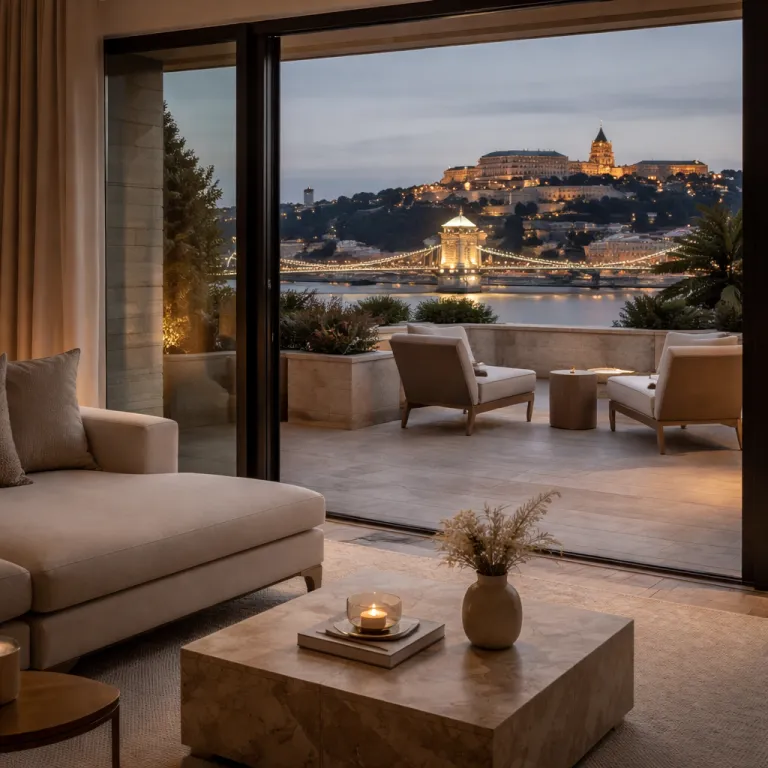
Luxury hotels Budapest as a new Central European centre of gravity
Luxury hotels in Budapest are no longer a supporting act to Vienna or Prague. The city is quietly building a high-end hotel pipeline that would look ambitious even for a larger capital, and that shift will change where discerning guests choose to book their next European stay. For travellers used to five-star predictability, Budapest, Hungary now offers something sharper, more competitive and more culturally specific.
Across upscale Budapest hotels and urban resorts, more than 22 new properties and roughly 3,000 additional rooms are scheduled over about five years. According to pipeline data cited by the Hungarian Hotel & Restaurant Association in its 2023 sector overview ("Magyar Szállodák és Éttermek Szövetsége – Fejlesztési Jelentés 2023", pp. 14–16) and cross-checked with STR development reports for Central & Eastern Europe (STR Hotel Pipeline Review, Q2 2023, pp. 6–7), that would expand the city’s luxury and upper-upscale inventory by close to a quarter, while average daily rates still sit around 30 to 50 percent below comparable hotels and resorts in Vienna or Paris based on 2022–2023 OTA price snapshots. When you can book a Danube-view room in a restored palace building with a serious spa for the price of a standard business hotel in Western Europe, the value equation becomes impossible to ignore.
The Four Seasons Hotel Gresham Palace is the clearest symbol of this shift in luxury hospitality. This art nouveau landmark, often simply called Gresham Palace, anchors the riverfront in District V with a façade that feels more gallery than hotel. When travellers ask “What is the best luxury hotel in Budapest?” the answer “Four Seasons Hotel Gresham Palace is highly rated” is not marketing copy; it reflects how consistently this palace-style property delivers for international guests, with occupancy levels that industry analysts say often track above the city’s five-star average.
Walk a few minutes along the same street and you feel how the city’s luxury hotels and palaces cluster with intent. W Budapest occupies a former palace on Andrássy út, while Matild Palace and Parisi Udvar Hotel Budapest frame the gateway between the river and the inner district streets. Each high-end Budapest property leans into a different narrative — nightlife, gastronomy, wellness — but all share a commitment to high-touch service that plays well with business-leisure travellers extending a work trip into a long night and a slow morning.
What makes this wave of Budapest hotel openings strategically interesting is not only the number of rooms. It is the way global brands are willing to double down on a single location, as seen in Marriott’s plan to place both a St. Regis and a Luxury Collection flag in twin palaces near the Danube. That kind of concentration of star brands in one district would be unusual in a larger city, and in Hungary’s capital it signals a belief that demand for luxury hotels and resorts will keep rising beyond the traditional weekend-break crowd. As one regional consultant for HVS Europe put it in a 2023 briefing on Central European capitals, “Budapest is moving from opportunistic city-break choice to planned primary destination for high-end travellers.”
Data snapshot: Budapest luxury pipeline and pricing
Planned upscale & luxury hotels (2023–2028): 22 properties
Approximate additional rooms: 3,000
Share of existing upscale & luxury inventory: ~25% increase
Average ADR discount vs. Vienna / Paris (2022–2023): 30–50% lower
Key sources: Hungarian Hotel & Restaurant Association 2023 development overview; STR Central & Eastern Europe Hotel Pipeline Review Q2 2023; OTA rate comparisons 2022–2023
From Danube palaces to side‑street hideaways: where the smart money sleeps
For travellers choosing between luxury hotels in Budapest, the real question is not whether to stay by the Danube or in the inner districts. The question is how close you want to be to the city’s layered daily life while still enjoying five-star insulation at night. Location in Budapest is not a simple river-versus-city-centre binary; it is a spectrum of streets, courtyards and palatial buildings that each shape your stay differently.
On the riverfront, Four Seasons Hotel Gresham Palace remains the benchmark for a grand-dame experience with art nouveau bones. Its rooms and suites look directly onto the Chain Bridge, and guests can walk across the river in a minute that feels like a private procession. The building itself is a masterclass in restoration, with stained glass and mosaics that make the lobby feel like a living museum rather than a generic hotel.
Move a few blocks inland and the equation changes. Properties like Eurostars Palazzo Zichy, which we profile in detail in our guide to refined stays in the heart of Budapest, show how a former palace or civic building can become a quiet five-star refuge on a residential street. Here, guests trade direct Danube views for a calmer district atmosphere, where a short walk brings you to local cafés rather than river-cruise queues. For many business-leisure travellers, that balance between discretion and access is exactly what makes these hotels compelling.
Then there are the new-generation addresses like Kimpton BEM Budapest, where the building’s historic shell hides a contemporary interior and a bar scene that comes alive at night. This Kimpton property sits within a short walk of major cultural venues, yet its rooms are oriented to reduce street noise and keep sleep quality high. When you book a stay here, you are buying into a hotel-collection philosophy that treats the lobby as a living room for both guests and locals.
In the inner city, Matild Palace and Parisi Udvar Hotel Budapest form a kind of golden triangle with the nearby udvar conversions that have turned former commercial courtyards into high-end hotels. Each palace-style address offers a different take on grandeur, from neo-baroque flourishes to art nouveau glasswork, but all share a commitment to service that feels more private club than anonymous hotel. For travellers comparing luxury hotels and resorts in Budapest, these properties show how far the city has moved beyond the old “cheap weekend” stereotype.
Thermal culture, pricing power and why value is the new luxury
High-end hotels in Budapest have a structural advantage that no amount of marketing in other capitals can replicate. The city’s thermal-bath ecosystem, fed by natural hot springs under the urban fabric, allows hotel teams to build spa programmes that feel rooted in place rather than imported from a generic wellness playbook. When a property pipes mineral-rich water directly into its pools, the spa becomes part of the city’s daily ritual, not just an add-on for jet-lagged guests.
Many luxury hotels and resorts in Budapest now design their wellness floors around this thermal heritage. Guests at palace-style addresses like Gresham Palace or Matild Palace can spend the day in meeting rooms, then walk down a few floors to a spa that references the same bathing culture you see at Széchenyi or Rudas. The result is a kind of integrated luxury where a short walk from your room to the pool connects business, leisure and local tradition in a single building.
Pricing is where the city quietly outperforms its peers. Five-star hotels in Budapest typically charge 30 to 50 percent less for comparable rooms and suites than similar properties in Vienna or Paris, while often offering larger spa areas and more generous wellness programmes. Comparative ADR data from STR and OTA rate checks in 2022–2023 show Budapest’s upscale and luxury segment running materially below Western European capitals, even as occupancy has recovered to pre-pandemic levels on peak weekends. For a business traveller looking to book three nights in a central hotel with a serious bar, a strong restaurant and a credible spa, the total bill will usually undercut Western Europe without any compromise on quality.
This value story extends beyond the obvious palace hotels. Our review of refined stays along the Danube shows how riverside hotels can offer great views, efficient service and comfortable rooms at rates that feel almost mispriced for the level of hardware. In these Budapest properties, guests can walk from lobby to river promenade in a minute, enjoy a drink at the bar as the lights come up on the Buda hills, then return to a quiet room that feels far more expensive than the nightly rate suggests. That combination of location, service and price is what will keep shifting high-end demand eastward.
There is a counter argument, of course. Some travellers still see Budapest as an “Eastern European weekend break” destination, with infrastructure gaps and flight connectivity that lag behind Vienna. Yet Budapest Airport handled more than 12 million passengers in 2023, with direct links to most major European hubs, and when you stand in the lobby of a Four Seasons–style property or check into a new-generation collection address like Kimpton BEM, it becomes clear that the city’s best hotels are already playing in a different league. As one Budapest-based asset manager noted in a 2023 panel on regional tourism, “Seasonality and staffing remain challenges, but the top-tier hotels are now benchmarked against Western Europe, not just neighbouring capitals.” The market will catch up to that reality; the only question is whether you want to be an early adopter or arrive once everyone else has realised the value.
Brand strategies, palace conversions and how to choose your next stay
What sets luxury hotels in Budapest apart right now is not just the hardware, but the way global and local brands are using the city as a laboratory. Marriott’s decision to place both a St. Regis and a Luxury Collection flag in twin palaces on the Danube is a bold bet that guests will understand and value nuanced differences between star brands in the same district. For travellers, that means more choice within a compact walking radius, but also a need to read each hotel’s positioning carefully before they book.
At the same time, independent conversions like Parisi Udvar Hotel Budapest and the various udvar projects show how former commercial courtyards can become high-ceilinged sanctuaries. These buildings often hide their drama behind modest street façades, then open into glass-roofed atriums where a central bar anchors the night. Guests who choose these hotels and resorts usually care less about a famous name on the door and more about how the rooms, public spaces and service culture work together as a coherent whole.
Business-leisure travellers should think in terms of use cases rather than brand logos. If your days are packed with meetings around Corvinus University or in the financial core, a stay at Kempinski Hotel Corvinus or another central Budapest hotel keeps your commute to a short walk while still delivering full-service amenities. If you want a more residential feel, properties slightly removed from the main tourist streets, such as those we profile in our guide to timeless palace stays in the city centre, will suit you well.
Across this landscape, one principle holds. Book early, check for special offers and always align your chosen Budapest location with the rhythm of your trip, whether that means late-night bar sessions, early-morning Danube walks or quiet evenings in a palace courtyard. As the pipeline of new hotels and resorts comes online, from St. Regis to SO/ Budapest and the Moxy and Residence Inn dual brand on Váci utca, the city will only become more competitive at the top end. For travellers willing to look beyond old clichés, luxury hotels and palaces in Budapest now offer one of the most compelling value-to-experience ratios in Europe.
Key figures reshaping luxury stays in Budapest
- Budapest currently counts around 20 recognised luxury hotels, a number that is set to rise significantly as 22 additional hotels and roughly 3,000 rooms are planned over about five years, according to development data compiled for the local hospitality sector by the Hungarian Hotel & Restaurant Association and STR in 2023.
- Room rates in five-star hotels in Budapest are typically 30 to 50 percent lower than equivalent properties in Vienna or Paris, while spa and wellness facilities are often larger and more integrated with local thermal culture, based on comparative pricing analyses by European hotel advisors and OTA snapshots taken in 2022–2023.
- The city’s new luxury pipeline includes a St. Regis, SO/ Budapest in the former Sofitel Chain Bridge building with around 350 rooms, and a dual-branded Moxy and Residence Inn on Váci utca, signalling strong confidence from global hotel groups in long-term demand.
- Many of Budapest’s leading luxury hotels, including Four Seasons Hotel Gresham Palace, Matild Palace and Parisi Udvar Hotel Budapest, occupy restored art nouveau or historic palace buildings, reflecting a broader trend toward integrating local architecture and culture into high-end hospitality.
- Industry observers note increased demand for intimate luxury properties, a stronger emphasis on sustainable practices and deeper integration of local culture in hotel design, trends that are particularly visible in the latest wave of palace and udvar conversions across central districts.