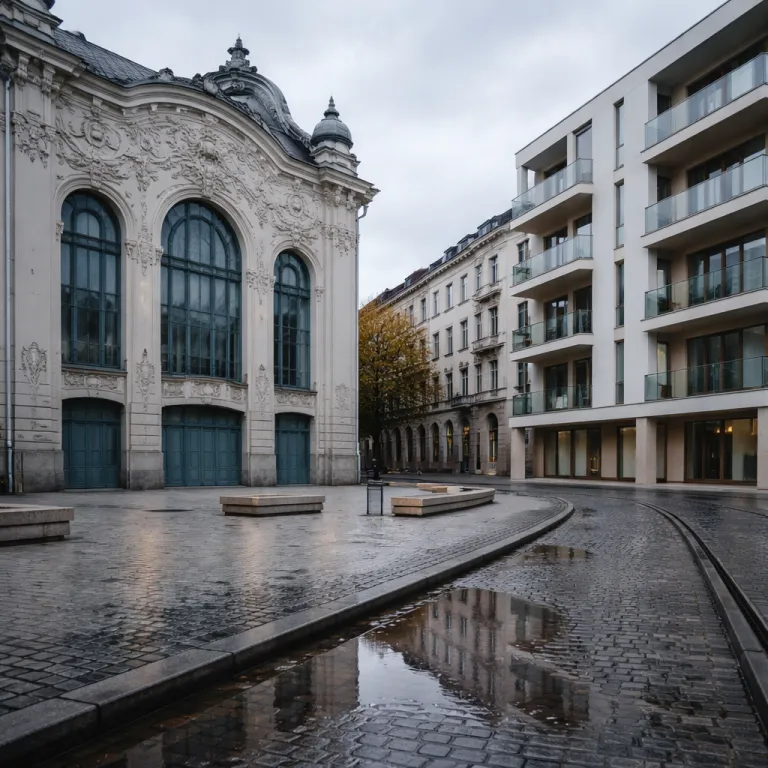
Reading Budapest through its architecture city hotels
Budapest rewards travelers who read the city through façades and floorplans. In this architecture city, the most interesting places to sleep double as primers in Hungarian history and in the layered building design that shaped both Buda and Pest. If you care about how a hotel building tells the story of Budapest city life, the right address will change the way you move between thermal baths, galleries and cafés.
The most characterful Budapest architecture hotels sit inside former palaces, banks or apartment houses that once defined a style popular with the local élite. These historic buildings now host hotels where original architectural elements meet discreet contemporary design, creating a dialogue between early century grandeur and present day comfort. Many of these properties sit within a 5 to 15 minute walk of the Danube, so your daily stroll becomes a lesson in how Buda and Pest grew into a unified city in 1873.
On the Pest side, the Párisi Udvar Hotel is a clear example of how a single building can condense the architectural story of Budapest, Hungary. This Art Nouveau landmark, completed in stages between 1909 and 1913 by architects Henrik Schmahl and Flóris Korb, blends Gothic, Moorish and Oriental style influences under a dramatic glass arcade. Across the river in Buda, smaller hotels occupy hillside streets near the Castle District, where the view over the city center and the Parliament turns every stay into a study in urban composition and skyline layering.
Art nouveau icons and heritage site palaces worth booking
If you are drawn to theatrical architectural gestures, start with the great Art Nouveau and neo Renaissance palaces that now operate as luxury hotels. These Budapest city hotels sit at the intersection of heritage site preservation and high end hospitality, making them ideal for travelers who want both narrative and comfort. Each hotel Budapest address in this category offers a different angle on how Hungarian architects absorbed European trends and then re exported their own style across the region.
Párisi Udvar Hotel, part of The Unbound Collection, occupies a former shopping passage whose building design fuses a Moorish Gothic shell with stained glass, Zsolnay tiles and intricate ironwork. The covered arcade once housed exclusive boutiques; today, staying here means sleeping under one of the most photographed ceilings in Budapest city, while the internal courtyard functions as a sheltered public square that recalls the city’s early twentieth century commercial life. The 2019 restoration balances original architectural elements with modern rooms, so you can appreciate the historic structure without sacrificing quiet or light. Source: Párisi Udvar Hotel official history and renovation notes.
Along the Danube, Gresham Palace and the nearby Gellért complex show how Art Nouveau became a style popular with both bankers and spa goers in Budapest, Hungary. Gresham Palace, designed by Zsigmond Quittner and finished in 1906 as an insurance headquarters, now houses a luxury hotel facing the Chain Bridge. The Gellért Baths, attached to a grand hotel on the Buda side and opened in 1918, remain a working thermal house where locals still soak beneath mosaics and sculpted columns. For a more intimate take on heritage, look at smaller city hotel conversions around the opera house district, then cross reference them with an elegant rooftop focused guide such as this detailed review of Hotel Rum and its gastronomy driven terrace: Hotel Rum Budapest rooftop guide.
Andrássy Avenue and the new generation of palace hotels
Andrássy Avenue is where Budapest’s architectural ego is most legible from pavement level. This grand boulevard, laid out in the 1870s and now part of a UNESCO World Heritage site, links the opera house to Heroes Square and City Park, and it concentrates some of the best Budapest architecture hotels for travelers who want a ceremonial address. Staying here places you inside a protected heritage corridor, with Buda’s hills on the horizon and Pest’s café culture at your doorstep.
W Budapest occupies a former palace on Andrássy Avenue, using bold interior design to riff on the building’s neo Renaissance shell rather than imitate it. The façade remains a textbook example of late nineteenth century architecture in Budapest, Hungary, while inside you find layered lighting, contemporary art and playful references to the city’s thermal and café rituals. A few doors away, Mamaison Hotel Andrássy Budapest showcases streamlined Bauhaus style from the 1930s, proving that Andrássy Avenue is not just about ornament but also about early century modernism and cleaner lines.
Further along the boulevard, Dorothea Hotel Budapest reflects the city’s historic and modern duality through a careful blend of preserved stonework and new glass volumes. These hotels form a walkable chain of architectural case studies, each one showing a different response to the same urban axis that runs from the opera house to Heroes Square. If you want to compare Danube view palaces with Andrássy Avenue mansions before you book, consult a curated overview of luxury stays and river facing suites here: Danube view luxury stays in Budapest.
Adaptive reuse: from utility buildings to design forward hotels
Some of the most interesting Budapest architecture hotels are not former palaces at all. They are early century utility buildings, apartment houses or commercial blocks whose quiet façades hide ambitious interior transformations. For a solo traveler, these hotels often feel more embedded in everyday Budapest city life while still delivering a strong sense of place and a clear link to the surrounding streets.
KOZMO Hotel Budapest is a prime example, set in a historic building on the Pest side that once served a technical function and now hosts a calm, residential style stay. The design respects the original building design while opening up generous public spaces, so you move through a sequence of courtyards and lounges that echo the traditional Hungarian apartment house layout with its shared staircases and galleries. Atrium Hotel follows a similar logic, combining century old architecture with a bright internal courtyard that acts as a contemporary reinterpretation of the classic light well and brings daylight deep into the plan.
On the Buda riverbank, Lánchíd 19 Design Hotel uses a moveable glass façade to project changing colors onto the Danube, while archaeological remains in the foundations remind guests of the site’s deeper historic layers. These hotels show how architectural elements like courtyards, staircases and arcades can be reused rather than erased, creating a more sustainable model for hotel city development in Budapest, Hungary. When you choose this type of city hotel, you are effectively voting for an approach that treats the whole architecture city as a living archive rather than a backdrop.
Planning an architecture led stay in Buda and Pest
To get the most from Budapest architecture hotels, plan your stay around walking routes rather than isolated monuments. One rewarding half day itinerary starts at Gresham Palace on the Pest embankment, crosses the Chain Bridge, then loops back through the city center to the House of Music Hungary in City Park. The full route covers roughly 5 to 6 km, depending on detours, and can be walked comfortably in three to four hours with café stops. Along the way you read how Buda and Pest evolved from separate towns into a single capital, simply by watching how the skyline shifts.
Begin at the riverfront, where the view from the promenade frames Buda’s castle hill as a layered composition of medieval, Baroque and nineteenth century architecture. Cross into Buda, then return to Pest through the dense streets behind the Parliament, heading toward the opera house and Andrássy Avenue, where neo Renaissance façades give way to Art Nouveau curves and later modernist experiments. Continue along city Andrássy until Heroes Square, then cut into City Park to reach the House of Music Hungary, a contemporary pavilion by Japanese architect Sou Fujimoto whose perforated roof and glass walls show how new building design can sit lightly within a historic landscape. Source: House of Music Hungary project description and architect’s notes.
If you want to align your hotel choice with this route, look for a hotel Budapest address near the river for the first nights, then shift to a city center base near the opera house or Andrássy Avenue. This split stay lets you experience both Buda’s hillside calm and Pest’s denser urban grid, while keeping most major heritage site buildings within a 2 to 3 km walking radius. For more granular advice on which district suits your style, use this district by district guide as a planning tool before you book: where to stay in Budapest guide.
FAQ
Which Budapest hotel best showcases Art Nouveau architecture ?
Párisi Udvar Hotel is widely regarded as the clearest Art Nouveau statement among Budapest architecture hotels. The building combines Gothic and Moorish references with stained glass, ceramics and sculpted stone, all organized around a dramatic internal arcade. Its location in the historic city center of Pest makes it easy to pair a stay here with visits to other Art Nouveau landmarks such as Gresham Palace and the Gellért Baths, both completed in the early twentieth century.
Are there modern design hotels in historic Budapest buildings ?
Yes, several hotels in Budapest, Hungary combine contemporary interiors with preserved façades and structures. Lánchíd 19 Design Hotel, KOZMO Hotel Budapest and Atrium Hotel all occupy historic buildings where new architectural elements have been inserted with care. These properties suit travelers who want a modern design language without losing the sense of staying inside a specific Budapest city building that reflects its original era.
How far in advance should I book architecture focused hotels ?
High demand Budapest architecture hotels near the Danube, the opera house or Andrássy Avenue often sell out weeks ahead for peak weekends. If you want a specific room type or a guaranteed view toward Buda’s hills or Heroes Square, aim to book at least one to two months in advance. This is especially true for small palace conversions and heritage site properties with limited inventory and only a handful of river facing suites.
Is it better to stay in Buda or Pest for architecture ?
Pest offers a denser concentration of architectural styles, from neo Renaissance boulevards to Art Nouveau banks and early century modernist blocks. Buda, by contrast, provides quieter streets, hillside views and a more residential atmosphere, with highlights around the castle district and the Gellért Baths. Many design conscious travelers split their stay between both sides of Buda and Pest to experience the full architectural range of the city and to compare riverfront perspectives.
Do Budapest hotels offer guided architecture tours or experiences ?
Some higher end hotels in Budapest city collaborate with local guides or architects to offer private walks focused on building design and urban history. Even when formal tours are not advertised, concierges at heritage site properties can usually arrange tailored routes that link your hotel with nearby landmarks and lesser known courtyards. For independent travelers, events such as the Budapest 100 Architectural Open House provide rare access to private buildings that are not normally open to guests. Source: Budapest100 festival program and participating building list.