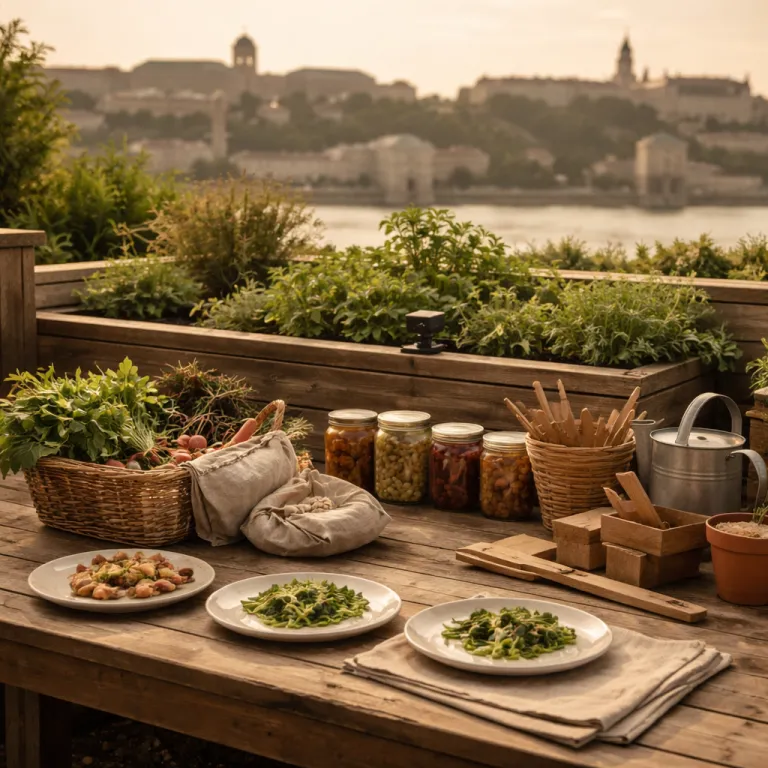
Salt, Michelin stars and the quiet revolution in Budapest’s hotel dining rooms
Luxury travelers used to ask where to find the best restaurants in Budapest. Now the sharper question is which hotel kitchens treat environmental responsibility as seriously as a Michelin star. In this city, sustainable dining in Budapest is no side project but a new measure of what counts as truly premium.
Salt in Budapest, widely recognized for its sustainability-led approach and highlighted by the Michelin Guide with a Green Star since 2021 for its commitment to local sourcing and preservation, sits at the center of this shift and shows how Hungarian fine dining can be both rooted and radically modern (Michelin Guide, restaurant communications). The restaurant’s approach to food is inseparable from its philosophy of sustainability, with foraged ingredients, preserved local food and a near obsessive focus on reducing food waste. When you book a luxury hotel in Hungary today, you are increasingly choosing between properties that either align with this environmentally conscious ethos or feel a generation behind.
Salt’s dining experience is intimate and quietly theatrical, with the chef often presenting dishes tableside and explaining the origin of each ingredient. The team has stated in interviews that more than 90% of ingredients are sourced from within Hungary, and many come from producers less than a few hours’ drive from the capital (chef interviews and local press). The menu leans into Hungary’s agricultural strengths, from mangalitsa pork cured in house to vegetables sourced from small farms within a few hours of the city. This is sustainable dining, Budapest style, where the farm table is not a marketing slogan but a literal description of how the restaurant’s supply chain works.
For hotel guests, Salt’s presence in the local scene has raised expectations for what a luxury restaurant inside or adjacent to a property should deliver. A simple bar snack now prompts questions about provenance, seasonality and whether the kitchen’s practices are genuinely eco friendly. One concierge at a Danube-side hotel described the shift this way: “Five years ago guests asked for the closest fine dining room; now they ask which chef knows their farmers by name.” The best hotels respond by building relationships with local producers, rethinking their bar scene and training teams to talk fluently about sustainability, not just wine pairings.
Budapest’s position within Hungary gives its restaurants unusual access to regional ingredients, and that proximity is a structural advantage for sustainability. Tokaj wine, Szeged paprika and mangalitsa pork can reach the city in hours, not days, which reduces transport emissions and keeps flavors vivid. When a Michelin Guide inspector evaluates a restaurant here, the short supply chain is part of what makes environmentally friendly practices feel authentic rather than performative.
ONYX, a long-established fine dining address that first received a Michelin star in 2011 and later gained a second star, has taken this logic further by embedding sustainability into its entire operation (Michelin Guide records). The restaurant’s team focuses on local food sourcing, careful use of salt and other seasonings, and a menu that respects both Hungarian culinary heritage and modern environmental standards. In a city where the Michelin Guide now highlights ethical practices alongside technical excellence, ONYX shows how star-level acclaim and a responsible approach to ingredients can reinforce each other.
For business travelers extending a stay, this means the classic question of which fine dining room to book now intersects with ESG thinking. You can host a client dinner at a Michelin-starred restaurant that also champions environmentally conscious methods, from energy efficient equipment to partnerships with organic suppliers. Sustainable gastronomy in Budapest is not about sacrificing pleasure; it is about aligning your travel choices with the same sustainability metrics you apply to your own company.
Even the bar culture around these flagship restaurants is changing, as cocktail bar teams experiment with local ingredients and low waste techniques. Citrus peels become infusions, leftover herbs are turned into syrups and the bar scene starts to mirror the kitchen’s commitment to minimizing food waste. In this context, the best bars in Budapest are no longer just about rare spirits but about how thoughtfully they use every part of each ingredient.
From vegan canteens to Moroccan plates : how hotels plug into Budapest’s sustainable food ecosystem
Step outside the grand lobbies and you find a compact city where eco conscious dining options cluster within walking distance of major luxury hotels. This density matters, because it lets travelers build an entire day of environmentally friendly eating without ever calling a taxi. For hotel concierges, the new mark of expertise is how well they map these restaurants to a guest’s schedule, dietary needs and appetite for experimentation.
The Planteen, often described as Hungary’s first fully vegan canteen, has become a quiet reference point for chefs and hotel teams who want to understand plant based food beyond the usual clichés. Its daily changing menus show how local ingredients can anchor satisfying, low impact meals that still feel indulgent after a morning in the thermal baths. When concierges recommend The Planteen to guests, they are not just suggesting another restaurant in Budapest; they are curating an environmentally conscious dining experience that complements the city’s wellness culture.
Marumba offers a different angle on sustainable dining, with a relaxed interior design that feels more like a creative studio than a traditional restaurant. The kitchen focuses on wholesome, plant forward dishes that pair well with natural wine and low intervention Hungarian bottles. For travelers staying in design led hotels, Marumba’s atmosphere resonates with the same design studio sensibility that shapes many contemporary lobbies and bar spaces.
Majorelle adds North African flavors to the sustainable dining conversation in Budapest, serving Moroccan plates built around fresh, responsibly sourced ingredients. Its growing seafood selection is handled with care for sustainability, which matters in a landlocked country where transport and sourcing can easily undermine eco friendly intentions. When a hotel recommends Majorelle, it signals that sustainability is not limited to Hungarian food but extends to global cuisines interpreted through a local, environmentally friendly lens.
These five leading sustainable restaurants in Budapest, from Salt to The Planteen, form a loose network that hotel concierges increasingly rely on. They allow guests to move between fine dining, casual canteens and street food style experiences while keeping sustainability at the center of each meal. For business leisure travelers, this variety turns a standard work trip into a curated tour of the city’s most thoughtful kitchens.
Luxury hotels that take sustainability seriously now train their teams to answer a simple but powerful question clearly. “What is sustainable dining?” and “Are there vegan options in Budapest?” and “How can I find sustainable restaurants in Budapest?” are no longer niche concerns but mainstream expectations. The smartest properties build their own internal travel guides, listing environmentally conscious restaurants, bars and street food counters by district, price point and walking distance.
Time spent at the city’s new food halls also plays into this ecosystem, especially for guests who want to sample multiple kitchens in one place. A detailed feature on a Time Out Market style food court inside a restored Belle Époque palace, for example, shows how curated street food and wine counters can sit comfortably alongside fine dining ambitions. Linking this kind of destination to a hotel stay lets travelers experience both the high polish of a Michelin-starred restaurant and the spontaneity of a street food stall within a single evening.
For hotel booking platforms, the implication is clear: listings that mention proximity to sustainable restaurants, eco friendly bars and plant based canteens now convert better with environmentally conscious guests. When a property highlights its relationships with local food partners like The Planteen or Marumba, it signals that sustainability is woven into the guest experience, not just the housekeeping checklist. In this context, sustainable dining in Budapest has become a filter through which travelers choose not only where to eat but where to sleep.
How Budapest’s luxury hotels turn sustainability credentials into a competitive edge
Behind the polished marble and Danube views, a quiet race is underway among Budapest’s top hotels. Properties are competing not only on spa menus and bar concepts but on how convincingly they can demonstrate sustainability. For discerning travelers, the difference between a generic green label and a serious certification is now as important as the thread count.
Several leading hotels in Budapest hold recognized sustainability certifications such as EarthCheck Silver, BREEAM, GREEN GROWTH 2050 and Bioscore, according to their published environmental reports and certification registers. These frameworks go beyond symbolic gestures, auditing everything from energy efficient lighting to water use, waste management and the sourcing of food ingredients. When a hotel invests in such programs, it signals that environmentally friendly practices extend from the restaurant kitchen to the boiler room and back to the cocktail bar.
Concrete changes are visible in the guest journey, starting with wooden key cards, filtered water stations and the quiet disappearance of single use plastic amenities. Some properties report cutting single use plastic by more than half in just a few years, based on internal audits and sustainability reports. Electric vehicle charging points in underground garages, LED lighting in corridors and smart climate control systems all contribute to lower emissions without compromising comfort. For a business traveler extending a stay, these details make it easier to align personal travel with corporate sustainability policies.
In the kitchens, chefs are rethinking menus around local food, seasonal produce and reduced food waste, often in dialogue with suppliers they know by name. Farm table relationships with producers of mangalitsa pork, organic vegetables and natural wine allow hotels to shorten supply chains and strengthen the local economy. This is sustainable dining in Budapest in its most practical form, where sustainability and hospitality reinforce each other plate by plate.
Bar programs are evolving in parallel, with cocktail bar teams adopting eco friendly techniques such as batch preparation, reusable garnishes and house made cordials from surplus ingredients. The bar scene in Budapest’s luxury hotels now includes zero waste cocktails, low alcohol options and thoughtful non alcoholic pairings that match the complexity of the food. Guests who once judged a bar solely on its spirits list now ask about the origin of herbs, fruits and even the salt on the glass rim.
Interior design choices also reflect this shift, as hotels commission a design studio to work with natural materials, recycled elements and energy efficient lighting schemes. Restaurants and bars are being reimagined as flexible spaces that can host both fine dining services and more casual, street food inspired events without excessive refurbishment. This reduces material waste over time and allows properties to adapt to changing dining trends while keeping sustainability at the core.
For booking platforms like stay-in-budapest.net, the next step is to surface these details clearly in property descriptions and filters. Guests should be able to see at a glance which hotels prioritize sustainable dining, which restaurants hold a Michelin star or special recognition for sustainability and how each property engages with local food culture. Linking out to in depth hotel reviews, such as a detailed look at an elegant museum style property that balances hospitality and heritage, helps travelers understand how design, service and sustainability intersect.
The tension, of course, lies in the rapid pace of hotel development in Budapest, especially in central districts along the Danube. New builds risk diluting sustainability claims if they prioritize room count over thoughtful integration with the city’s food systems and environmental goals. The properties that will stand out in the next decade are those that treat sustainability not as a marketing line but as the organizing principle for every restaurant, bar and guest touchpoint.
District by district : where sustainable gastronomy meets luxury stays
Budapest rewards travelers who think in districts rather than in generic city breaks. Each kerület offers a different balance of luxury hotels, restaurants, bars and sustainable dining opportunities. For business leisure guests, choosing the right neighborhood can turn a routine stay into a quietly transformative travel experience.
District V, hugging the Danube on the Pest side, remains the classic address for high end hotels and executive meetings. Here, sustainable dining in Budapest often means refined hotel restaurants that integrate local ingredients, Hungarian wine lists and carefully calibrated tasting menus into a polished fine dining setting. Guests can walk from a boardroom to a Michelin Guide listed restaurant in minutes, then finish the evening in a cocktail bar that treats citrus peels and herbs as resources rather than waste.
Cross the river to Buda and the mood shifts, with hillside properties leaning into wellness, thermal baths and slower paced dining. Farm table concepts feel particularly natural here, as chefs draw on nearby producers for vegetables, dairy and mangalitsa pork while keeping menus compact and seasonal. The bar scene is quieter but often more focused on local wine, pálinka and low intervention spirits that reflect Hungary’s agricultural heritage.
District VII, long associated with ruin bars and street food, has matured into a testing ground for environmentally conscious hospitality. Luxury and premium hotels on its edges now position themselves as gateways to a more experimental dining experience, where guests can move from vegan canteens to natural wine bars within a few blocks. Here, sustainability is less about white tablecloths and more about how restaurants manage food waste, source ingredients and design interiors that can evolve without constant renovation.
For travelers who rely on curated travel guides, the most useful ones now map sustainable restaurants, bars and hotels onto tram lines and walking routes. They highlight where to find the best restaurants for local food, which cocktail bar programs are genuinely eco friendly and how to balance fine dining with street food without compromising on sustainability. This is where sustainable dining in Budapest becomes a navigational tool rather than just a marketing phrase.
Hotel booking platforms can add real value by integrating these district level insights directly into search filters and property pages. Instead of listing only star ratings and spa facilities, they can show proximity to Michelin-starred restaurants, vegan canteens, environmentally friendly bars and markets that champion local ingredients. For a traveler comparing options late at night, this level of detail turns an abstract sustainability claim into a concrete reason to choose one hotel over another.
As the city’s hospitality scene matures, the most interesting properties will be those that treat their restaurants and bars as part of Budapest’s wider sustainable food ecosystem. They will collaborate with local partners like Salt, ONYX, The Planteen, Marumba and Majorelle, sharing knowledge on ingredients, waste reduction and guest education. In doing so, they help ensure that sustainable dining in Budapest remains not just a trend but a defining characteristic of the city’s luxury travel identity.
For executives extending a business trip, this means you can now align your personal travel, corporate values and culinary curiosity in one coherent itinerary. You might start with a Michelin star tasting menu built around Hungarian produce, continue with a plant based lunch at a vegan canteen and end with a glass of Tokaj in a bar that treats sustainability as seriously as its spirits list. In Budapest, sustainability has moved from the margins of hospitality to the center of what makes the city’s best hotels and restaurants worth your time.
Key figures shaping sustainable dining in Budapest
- Budapest currently counts at least five leading restaurants explicitly focused on sustainable dining, including Salt, ONYX, The Planteen, Marumba and Majorelle, forming a critical mass that influences hotel restaurant standards across the city (based on publicly available restaurant descriptions and local dining guides).
- Salt opened in Budapest in 2019 and has since been highlighted by the Michelin Guide with a Green Star for its commitment to foraging, preservation and close relationships with Hungarian producers, a special recognition that has pushed other fine dining venues and hotel kitchens to formalize their own sustainability strategies (Michelin Guide and restaurant communications).
- ONYX has held Michelin recognition for more than a decade, first earning a star in 2011 and later adding a second, and its continued emphasis on local sourcing and sustainability shows how star-level acclaim in Budapest now often goes hand in hand with environmentally conscious practices (Michelin Guide records and restaurant statements).
- Several Budapest hotels have achieved sustainability certifications such as EarthCheck Silver, BREEAM, GREEN GROWTH 2050 and Bioscore, indicating a citywide shift from ad hoc green gestures to audited, long term sustainability programs (hotel sustainability reports and certification databases).
- Hungary’s geography allows restaurants in Budapest to source key ingredients such as Tokaj wine, Szeged paprika and mangalitsa pork from domestic regions within a few hours, reducing transport related emissions compared with longer European supply chains (national agricultural and logistics data).